What is the Church?

July 23, 2025

“By this shall all men know that ye are my disciples, if ye have love one to another.” John 13:35
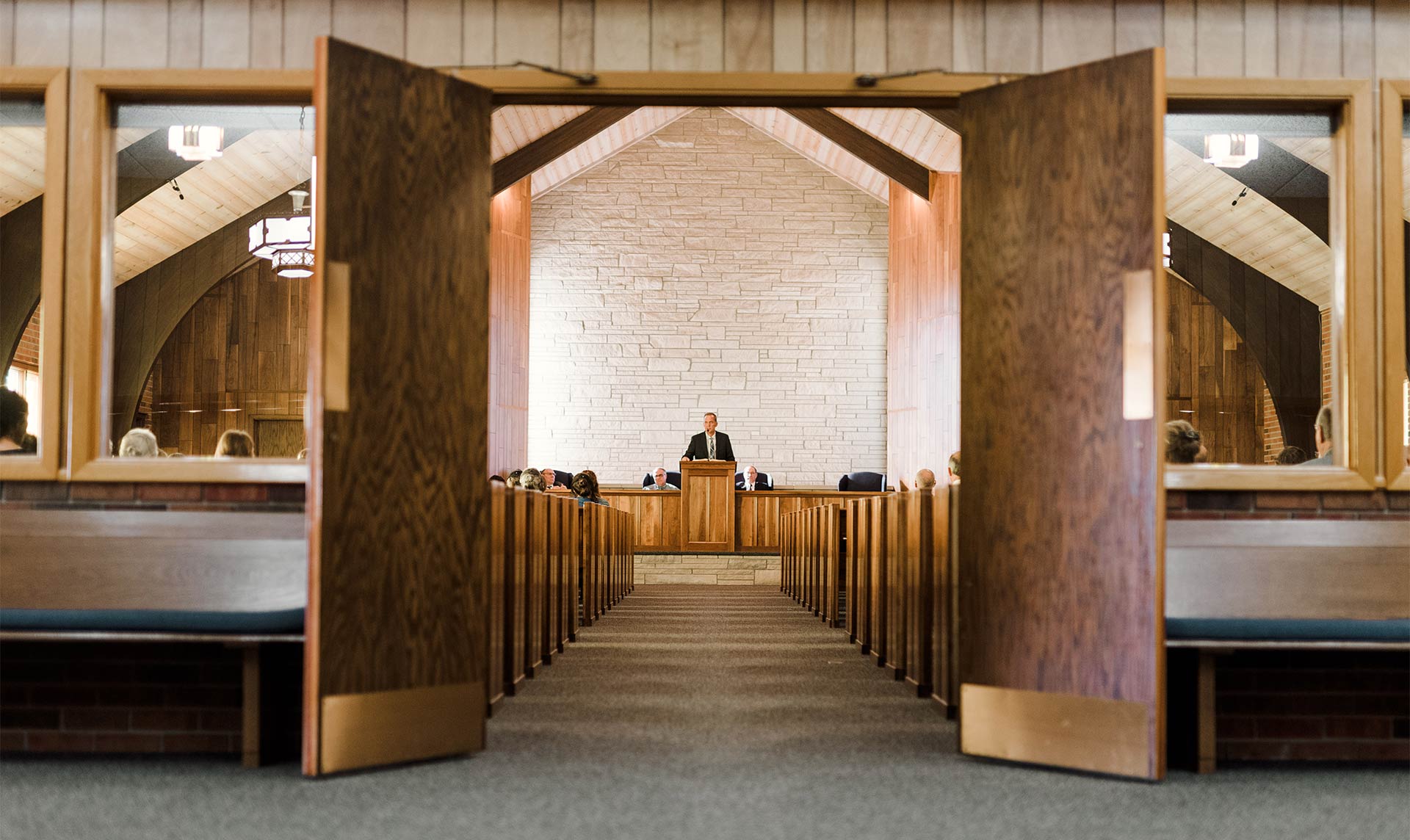
How can we begin to more fully comprehend precisely what the church is? The Bible speaks of her in metaphors that are at once sobering, noble, awe-inspiring, and holy. Never in the Bible is the church associated with a building. She is comprised of the people who have been given a measure of faith in Jesus great enough to bring them to humble and genuine repentance before the living God. Born of the Holy Spirit, they are not only like Jesus, but they are also a part of him – His body – his hands and feet on the earth. Their love for one another, surpassing all human barriers, bears witness to the dramatic and lifechanging work of Jesus in them.


Subject to Jesus, like a wife to a husband, she is called to be one with him.[i] As she functions as a body, in unity and harmony, the will of God is accomplished on earth as it was in Jesus. As she keeps herself pure and holy, by the power of the Holy Spirit, she prepares for the great marriage feast of the lamb – as the pure bride of Christ. As she prays for and ministers to a broken and corrupted world, she fills the role of a royal priesthood, ordained to praise God and to intercede for many. And, as she is built up of “living stones” into the temple or dwelling place of God on earth, she becomes the house of prayer for all nations.


The church is a fellowship of believers in Jesus Christ committed to gathering regularly under recognized spiritual leadership for purposes of fulfilling God’s will. The church is the ecclesia – a word meaning, “the gathering.” Not merely a gathering of people brought together in a social club or for self-governance but a gathering of people who are all bought with the blood of Jesus and transformed by his spirit. A gathering of people that overcomes all barriers of nationality, social status, gender, and culture by genuine and heartfelt love. This love moves the church to live in a way starkly different than the society in which she finds herself – a way of deep love, purehearted peace, and holiness.


In his first letter to the churches, the Apostle Peter quotes the Old Testament commandment to, “Be ye holy as I am holy.” This holiness is impossible to attain by human effort, but it is possible to attain through faith and the Holy Spirit’s power. In his second letter he teaches how to add virtue to faith, knowledge to virtue, self-control to knowledge, patience to self-control, godliness (holiness) to patience, brotherly kindness to holiness, and above all charity – the self-sacrificing love that binds the church together. The church is called to value all these characteristics above success on this earth. Unsurprisingly, the lust for earthly success wars against our eternal soul.


The Lord does not intend for us to follow him in isolation, depending only on oneself. Not only do we need the Holy Spirit, but we also need each other. The twelve disciples needed each other. The early church needed Mary, and the wife of Cleophas, and the daughters of Philip. Perhaps even Jesus needed the twelve disciples and others to sustain and encourage him! Since the very beginning, the gathering of God’s people has been recipient of the blessings of fellowship, servanthood, and the graces of God manifested through his people. We are called to serve him in unity of spirit, building one another up in the bond of love. We are insufficient by ourselves.


Love is demonstrated in three primary ways.


 ---------------------------------------------------- Continued portion below ----------------------------------------------------


Love sees the needs of others and does what she can to meet those needs. Love obeys God’s commands because God is love – and therefore, his ways are love. And love sacrifices one’s own needs and preferences for the good of others. Such a mindset of service and sacrifice forges a bond of unity that can and will withstand all the assaults of the devil.[ii] Make no mistake, the devil will try to break this deep fellowship that comes through Jesus. He will try to sow lies about fellow believers. He will try to lead us into selfish living. He will try to prove that God’s power is not sufficient to enable people to follow God’s commands.


Take some time to think of other ways in which Christian love expressed in an overcoming church community bears witness to the goodness of God and the mercy of Jesus.


Although it is the pinnacle of our calling, if such love were only toward one’s fellow believers, it would be inadequate. Jesus noted that even sinners love those that love them. The church, this gathering of born-again followers of Jesus, who love each other deeply, is commanded to love those who hate us. We are to minister to – or serve – those who are actively working to hurt us. We are to pray for our enemies and gently lift them up before a merciful God, if perhaps he will grant them faith unto repentance. All believers are ordained to serve as a royal priesthood, to demonstrate the goodness of God to all people.


Although we carry this treasure in earthen vessels and find it challenging to live up to these standards of holiness, the church is far more than a gathering of imperfect people merely hoping to be like Jesus. She is the “pillar and ground of the truth,” the living expression of his righteous words and purposes in all ages, through which Jesus upholds and proclaims his redemptive purposes. The Church is not a political kingdom seeking earthly power or authority, but a separated holy people humbly working under the authority of Christ in the world. The devil tempted Jesus with earthly power, offering all the kingdoms of the world if only Jesus would worship Satan. The Lord knew that worship was reserved for the living God and none other. And he knew that all power would become his, through faithfulness to the father; not by collaborating with Satan. We must refuse the devil’s seduction, as Jesus did.


Jesus made it clear that he would establish his church, his body, and it would accomplish his will. He also asked if he would find faith when he returned. “Let us therefore hold fast the profession of our faith without wavering; (for he is faithful that promised;) And let us consider one another to provoke unto love and to good works: Not forsaking the assembling of ourselves together, as the manner of some is; but exhorting one another: and so much the more, as ye see the day approaching.”[iii] There is nothing more important in this life than to follow Jesus out of a pure heart fervently. His mercy is from everlasting to everlasting and reaches even to us. If we be the church that Jesus desires us to be, many will see, and hear, and desire this gift of life and love without price.



[i] Ephesians 5:22-32

[ii] 1 Corinthians 13:7-8

[iii] Hebrews 10:23-25

October 21, 2026
As we approach the end of fall and the harvest season, we often focus our attention on Thanksgiving Day. We are fortu­nate to live in a land that recognizes the need to pause and give thanks to our great God for the many blessings he bestows upon us. However, the Bible calls us to be thankful in all times and circumstances – not just once a year. “O give thanks unto the Lord, for he is good.” [i] “In every thing give thanks; for this is the will of God in Christ Jesus concerning you.” [ii] These two verses are similar and yet can be interpreted differently if quoted in isolation. Thanking God for his good­ness seems an easy commandment to obey; however, some circumstances are more difficult to appreciate. Giving thanks or being thankful is referenced over one hundred times in scripture. And naturally it can seem easier to give thanks when circumstances are pleasing. It is easier to thank God when a loved one repents. It is easier to thank him when we are sitting in church, listening to his Word, worshipping in song, surrounded by faithful believers. It is easier to recite 1 Thess. 5:18 when the trials of life are light and well-spaced. But what happens when life is not going well, circumstances seem impossible, or difficulties seem to pile up? Can we have thankful posture in dire situations or through sad experiences? It is clear in the Bible that by God’s grace and with intentional effort, we can have a thankful spirit and respect toward God even when the load is heavy. Scriptures in Job provide an excellent Old Testament example. After hearing a series of devastating reports about his family and possessions, Job was able to say “The Lord gave, and the Lord hath taken away; blessed be the name of the Lord.” [iii] After being struck with sore boils from the sole of his foot to his crown and having been ridiculed by his wife for retaining his integrity, Job said “Shall we receive good at the hand of God, and shall we not receive evil?” [iv] Job did not minimize the pain of the evil he was experiencing, but in the midst of the devastation he focused his attention on the goodness and faithfulness of God. Likewise, the disciples in the New Testament were often faced with seemingly insurmountable obstacles as they spread the Word of God. Yet they looked upon their afflictions as a privi­lege. After being beaten and com­manded to not speak in the name of Jesus, “They departed from the pres­ence of the council, rejoicing that they were counted worthy to suffer shame for his name.” [v] At the same time, when Stephen was stoned, they grieved deeply at the devastating loss, yet trusted in God’s grace and goodness to see them through and somehow redeem the worst of circumstances. -----------------CONTINUED PORTION BELOW-------------------- Remembering the Lord's graciousness and track record of bringing good out of evil can help us maintain a thankful heart despite the challenges we face. Whether amidst hard circumstances or easy, we can focus on the goodness and faithfulness of God. Without intentional focus, we can tend to overlook gratitude when life is good because the very simple and basic needs of life are so easily realized. An abundance of material blessings can lead us to take basic needs for granted. However, being grounded in a thankful spirit can help carry us when sometimes things do not seem abundant. Simple disciplines or practices can help us foster this thankful spirit. Taking the time to pause and write a list of all we have received from God, giving him thanks for his goodness can help us turn from an entitled mindset toward a thankful mindset. Remembering God's goodness can be especially helpful when life is hard. The practice of gratitude journaling helps us remain focused on God above all during these overwhelming times. Beyond the physical needs that can be so easy to count, he also provides many spiritual blessings. In time of need, he provides us with an abundance of grace that gives us love we do not deserve and helps us serve him in ways far beyond what we could do of our own ability. God’s wisdom and his compassion assure us that he will provide for all our needs, and yet he will also withhold what is harmful if we will allow him to do so. He knows our needs and in his infinite wisdom he will supply all our needs. A practice of worshipping God can also help grow our spiritual life and encourage grateful hearts. God’s truths can be engraved into our minds as we sing and praise him, no matter the circumstances. In addition, our church body encourages us to connect, travel, and grow together as believers, helping one another during both joyous and hard times in life. This spiritual connection with others is a spiritual blessing that can easily be forgotten. Finally, many of us have been born into families where we were taught the truth of God’s Word, being exposed since we were young to the promise of salvation through Jesus Christ and the knowledge of our great and loving God whom we can call Father. This thankful spirit is often born out of knowing the Father, whose image we carry. Having a clear vision and understanding of God’s character and attributes can help us develop a thankful spirit. Among the many reasons to thank God are his power, his grace, and his mercy. We thank him for the love he showed when he sent his only begotten son, allowing us to have forgiveness of our sins and victory over death through repentance, confession, and faith in his name. He provides his Word, giving us a perfect source of wisdom and direction for our lives. His Holy Spirit provides believers with comfort, conviction, and guidance toward all truth. In addition, there are many other attributes of God to consider such as his goodness, presence, sustenance, protection, and many more. The implications for our lives of the many attributes in this list, which could be much longer, are beyond human comprehension but worth contemplating more deeply as we practice a life of gratitude. Whether you are in a joyous time of life or a time when life is difficult, may the remembrance of these many truths provide a new understanding to the Scripture’s challenge to, “In every thing, give thanks.” [vi] May this Thanksgiving holiday remind you of our great and good God, the loving sacrifice of Jesus, and the faithful presence of the Holy Spirit who has come to guide us not only in the good, but also in the difficult of life. And may this testimony of thankfulness greatly affect our own lives and the lives of those around us. [i] Psalm 107:1 [ii] I Thess. 5:18 [iii] Job 1:21 [iv] Job 2:10 [v] Acts 5:41 [vi] I Thess. 5:18
September 22, 2026
“Let us therefore follow after the things which make for peace, and things wherewith one may edify another.” Romans 14:19
July 27, 2026
“I have taught thee in the way of wisdom.” Proverbs 4:11
May 20, 2026
"What time I am afraid, I will trust in thee." Psalm 56:3
March 23, 2026
“Beloved, now are we the sons of God, and it doth not yet appear what we shall be.” 1 John 3:2
February 23, 2026
The example of Ruth
January 20, 2026
“Let no corrupt communication proceed out of your mouth, but that which is good to the use of edifying, that it may minister grace unto the hearers.” Ephesians 4:29
December 19, 2025
“But sanctify the Lord God in your hearts: and be ready always to give an answer to every man that asketh you a reason of the hope that is in you with meekness and fear.” 1 Peter 3:15
November 19, 2025
"A new commandment I give unto you, That ye love one another; as I have loved you, that ye also love one another." John 13:34
September 22, 2025
“Thou shalt love the Lord thy God with all thy heart, and with all thy soul, and with all thy mind, and with all thy strength…and…Thou shalt love thy neighbor as thyself.” Mark 12:30-31