Living peacefully in a violent world

May 20, 2026

"What time I am afraid, I will trust in thee." Psalm 56:3

The world around us tends toward violence. A follower of Jesus can easily become desensitized as the devil normalizes violence as a way of life. As Satan and his evil spirits promote the "Way of Conflict" in subtle ways, extreme levels of violence may appear to be the only concern against which a follower of Jesus need guard. Allowing our minds to be preoccupied with fears of such violence as a home invasion or a mass shooter may provoke us to wrongly turn to reciprocal violence as a response to calm our fears.


Violence may be narrowly defined as the use of physical force intended to harm, injure, abuse, damage, or destroy. However, Jesus teaches us to think beyond the physical world and be aware of the unseen world. When asked about John the Baptist, he noted that from the days of John the Baptist the kingdom of heaven was suffering violence. This was a spiritual conflict waged primarily by words intended to destroy all that was good. The Apostle John explicitly notes that he who hates his brother is a murderer. The context of his warning covers a spectrum from merely loving a brother less than oneself to detesting him or even feeling outright hatred. In these ways, we see that violence is not only physical but also takes place in the spiritual and emotional realm.


One element that normalizes aberrant behavior is the frequency with which we are exposed. If many people around us drive their vehicles aggressively (violently), we may begin to feel that it is appropriate and necessary to drive aggressively. If the world around us turns to lawsuits as the answer to conflicts, it becomes easier to rationalize Jesus' teaching that we should not resist such assaults against our wellbeing. When the larger Christian community no longer hesitates to swear an oath, we may feel uncomfortable standing on Jesus' words to swear not at all. Is it possible that such rationalization causes violence against the kingdom of heaven, normalizing beliefs contrary to the plain meaning of scripture? Perhaps the most pervasive violence in our time, extreme language against those whose political beliefs differ has normalized harsh rhetoric while characterizing entire groups of people as categorically evil. Such violence is exacerbated by news media and social networks. Not only do they normalize violent actions and words, but they also attract viewers and therefore sell more advertising when they publish the gory details, normalizing horror. The Lord calls us to love our enemies and pray for them.


Although murder and armed attacks have been a reality of life since the dawn of time, few of us have suffered personal attacks or the invasion of our country. Lack of experience with physical violence may paradoxically increase our fear of that remote possibility. Media reports of mass shootings in churches, armed robberies, and home invasions can elevate our anxiety about such possibilities, even though the statistical risk of suffering injury or death from violence is far lower than from many everyday activities. How should we prepare for possible violent events like a home invasion or an attack at church?[1]


-----------------CONTINUED PORTION BELOW--------------------


Whether against physical or spiritual violence, the condition of our heart is the primary defense. The natural human response to violence tends to be more violence. If our heart is not prepared, we may respond to perceived attacks with more violence, whether physically, verbally, emotionally, or some other way. Verbal and emotional violence are far more likely than a physical attack. Understanding the impact of violence in daily life can help us prepare our heart to gracefully respond in the peaceful manner of Christ, through the power of the Holy Spirit, turning the other cheek. If we are living in the peace of Christ in our daily interactions, it lays a solid foundation for an appropriate response in the rare event of a violent attack. 


Here is what we can do. Pray to never respond to a verbal attack with a sharp tongue.[2] A Holy Spirit empowered heart avoids violence in conversation and demonstrates the Lord's "Way of Peace" in all interactions. James observed that our tongue is indeed an instrument of violence; "A fire, a world of iniquity; setting on fire the course of nature."[3] Cursing (speaking ill of others) should never come out of our mouths. How can we bless (speak well of) God and curse others? Jesus himself clearly taught that, "A good man out of the good treasure of his heart bringeth forth that which is good; and an evil man out of the evil treasure of his heart bringeth forth that which is evil: for of the abundance of the heart his mouth speaketh."[4] What is in our heart is what comes out of our mouth. Similarly, our actions clarify what we really believe. If we truly believe that our kingdom is not of this world, then we will not use violence to defend ourselves or our faith. We will use gentle words guided by the Holy Spirit. 


If we truly believe that vengeance belongs to the Lord and that he sets up governments as it pleases him, then we will leave violent actions to the Lord and to his designated government. If we embrace the Lord's instruction to, "Fear not them which kill the body, but are not able to kill the soul: but rather fear him which is able to destroy both soul and body in hell," then we will have a peaceful heart that can rest on God's ability to provide all we need, whether we live or die.[5] Many martyrs have demonstrated the beauty of facing senseless death at the hands of evil men with courage, faith, and genuine love for their enemies.


We may spend a lot of time, money, and energy preparing for risks that will never happen. But there is one risk that is certain for all of us. Satan seeks to deceive us into sin. Do we spend as much time and effort teaching our children the truths of God’s word, praying for them, and involving them in godly activities? Do we spend as much time putting our hearts, by faith, in a place of calm confidence in the Lord to watch over and protect us, certain that he will provide for our survivors in the case of some catastrophe? As Christians, we have powerful ways of coming to terms with the unavoidable risks of living in the world. The Bible calms our souls by reminding us that our lives rest in God’s hands. No matter where we go, “Even there shall thy hand lead me, and thy right hand shall hold me.”[6] Amid tremendous threat, David wrote, “My times are in thy hand: deliver me from the hand of mine enemies.”[7] Jesus leads us through the valley of the shadow of death such that we fear no evil and Peter encourages us to cast all our care upon God, for he cares for us!


[1]
 Around the Table episode: How to Handle an Aggressive Intruder

[2] Proverbs 15:1

[3] James 3:6

[4] Luke 6:45

[5] Matthew 10:28

[6] Psalm 139:10

[7] Psalm 31:15

October 21, 2026
As we approach the end of fall and the harvest season, we often focus our attention on Thanksgiving Day. We are fortu­nate to live in a land that recognizes the need to pause and give thanks to our great God for the many blessings he bestows upon us. However, the Bible calls us to be thankful in all times and circumstances – not just once a year. “O give thanks unto the Lord, for he is good.” [i] “In every thing give thanks; for this is the will of God in Christ Jesus concerning you.” [ii] These two verses are similar and yet can be interpreted differently if quoted in isolation. Thanking God for his good­ness seems an easy commandment to obey; however, some circumstances are more difficult to appreciate. Giving thanks or being thankful is referenced over one hundred times in scripture. And naturally it can seem easier to give thanks when circumstances are pleasing. It is easier to thank God when a loved one repents. It is easier to thank him when we are sitting in church, listening to his Word, worshipping in song, surrounded by faithful believers. It is easier to recite 1 Thess. 5:18 when the trials of life are light and well-spaced. But what happens when life is not going well, circumstances seem impossible, or difficulties seem to pile up? Can we have thankful posture in dire situations or through sad experiences? It is clear in the Bible that by God’s grace and with intentional effort, we can have a thankful spirit and respect toward God even when the load is heavy. Scriptures in Job provide an excellent Old Testament example. After hearing a series of devastating reports about his family and possessions, Job was able to say “The Lord gave, and the Lord hath taken away; blessed be the name of the Lord.” [iii] After being struck with sore boils from the sole of his foot to his crown and having been ridiculed by his wife for retaining his integrity, Job said “Shall we receive good at the hand of God, and shall we not receive evil?” [iv] Job did not minimize the pain of the evil he was experiencing, but in the midst of the devastation he focused his attention on the goodness and faithfulness of God. Likewise, the disciples in the New Testament were often faced with seemingly insurmountable obstacles as they spread the Word of God. Yet they looked upon their afflictions as a privi­lege. After being beaten and com­manded to not speak in the name of Jesus, “They departed from the pres­ence of the council, rejoicing that they were counted worthy to suffer shame for his name.” [v] At the same time, when Stephen was stoned, they grieved deeply at the devastating loss, yet trusted in God’s grace and goodness to see them through and somehow redeem the worst of circumstances. -----------------CONTINUED PORTION BELOW-------------------- Remembering the Lord's graciousness and track record of bringing good out of evil can help us maintain a thankful heart despite the challenges we face. Whether amidst hard circumstances or easy, we can focus on the goodness and faithfulness of God. Without intentional focus, we can tend to overlook gratitude when life is good because the very simple and basic needs of life are so easily realized. An abundance of material blessings can lead us to take basic needs for granted. However, being grounded in a thankful spirit can help carry us when sometimes things do not seem abundant. Simple disciplines or practices can help us foster this thankful spirit. Taking the time to pause and write a list of all we have received from God, giving him thanks for his goodness can help us turn from an entitled mindset toward a thankful mindset. Remembering God's goodness can be especially helpful when life is hard. The practice of gratitude journaling helps us remain focused on God above all during these overwhelming times. Beyond the physical needs that can be so easy to count, he also provides many spiritual blessings. In time of need, he provides us with an abundance of grace that gives us love we do not deserve and helps us serve him in ways far beyond what we could do of our own ability. God’s wisdom and his compassion assure us that he will provide for all our needs, and yet he will also withhold what is harmful if we will allow him to do so. He knows our needs and in his infinite wisdom he will supply all our needs. A practice of worshipping God can also help grow our spiritual life and encourage grateful hearts. God’s truths can be engraved into our minds as we sing and praise him, no matter the circumstances. In addition, our church body encourages us to connect, travel, and grow together as believers, helping one another during both joyous and hard times in life. This spiritual connection with others is a spiritual blessing that can easily be forgotten. Finally, many of us have been born into families where we were taught the truth of God’s Word, being exposed since we were young to the promise of salvation through Jesus Christ and the knowledge of our great and loving God whom we can call Father. This thankful spirit is often born out of knowing the Father, whose image we carry. Having a clear vision and understanding of God’s character and attributes can help us develop a thankful spirit. Among the many reasons to thank God are his power, his grace, and his mercy. We thank him for the love he showed when he sent his only begotten son, allowing us to have forgiveness of our sins and victory over death through repentance, confession, and faith in his name. He provides his Word, giving us a perfect source of wisdom and direction for our lives. His Holy Spirit provides believers with comfort, conviction, and guidance toward all truth. In addition, there are many other attributes of God to consider such as his goodness, presence, sustenance, protection, and many more. The implications for our lives of the many attributes in this list, which could be much longer, are beyond human comprehension but worth contemplating more deeply as we practice a life of gratitude. Whether you are in a joyous time of life or a time when life is difficult, may the remembrance of these many truths provide a new understanding to the Scripture’s challenge to, “In every thing, give thanks.” [vi] May this Thanksgiving holiday remind you of our great and good God, the loving sacrifice of Jesus, and the faithful presence of the Holy Spirit who has come to guide us not only in the good, but also in the difficult of life. And may this testimony of thankfulness greatly affect our own lives and the lives of those around us. [i] Psalm 107:1 [ii] I Thess. 5:18 [iii] Job 1:21 [iv] Job 2:10 [v] Acts 5:41 [vi] I Thess. 5:18
September 22, 2026
“Let us therefore follow after the things which make for peace, and things wherewith one may edify another.” Romans 14:19
July 27, 2026
“I have taught thee in the way of wisdom.” Proverbs 4:11
March 23, 2026
“Beloved, now are we the sons of God, and it doth not yet appear what we shall be.” 1 John 3:2
February 23, 2026
The example of Ruth
January 20, 2026
“Let no corrupt communication proceed out of your mouth, but that which is good to the use of edifying, that it may minister grace unto the hearers.” Ephesians 4:29
December 19, 2025
“But sanctify the Lord God in your hearts: and be ready always to give an answer to every man that asketh you a reason of the hope that is in you with meekness and fear.” 1 Peter 3:15
November 19, 2025
"A new commandment I give unto you, That ye love one another; as I have loved you, that ye also love one another." John 13:34
September 22, 2025
“Thou shalt love the Lord thy God with all thy heart, and with all thy soul, and with all thy mind, and with all thy strength…and…Thou shalt love thy neighbor as thyself.” Mark 12:30-31 
August 22, 2025
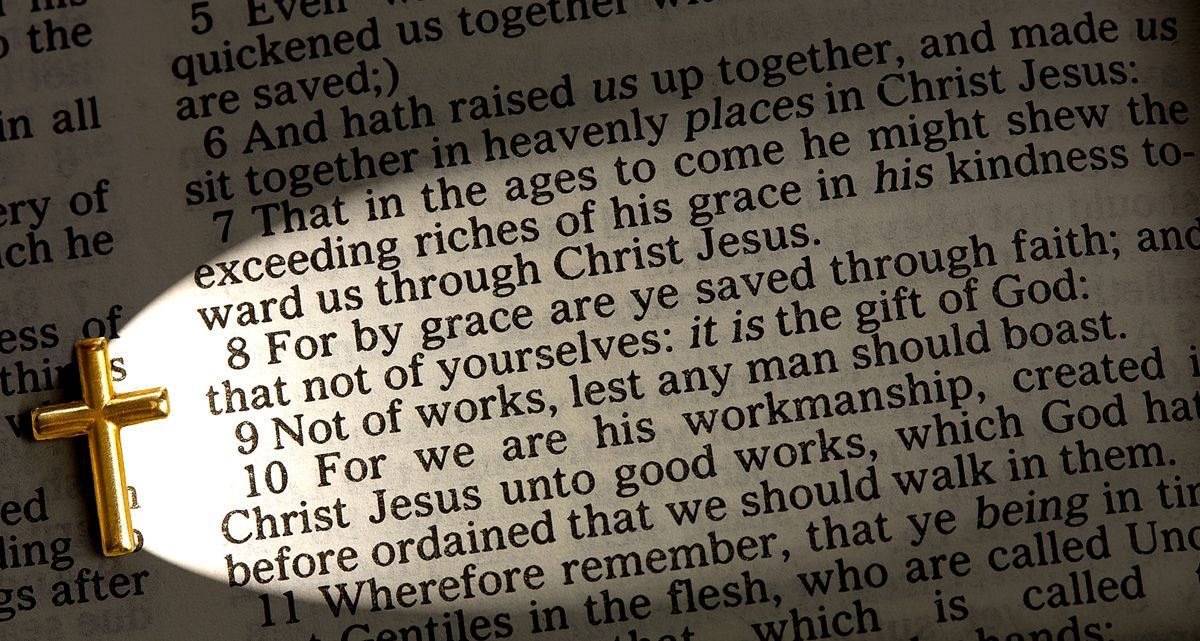
“For by grace are ye saved through faith; and that not of yourselves: it is the gift of God: Not of works, lest any man should boast. For we are his workmanship, created in Christ Jesus unto good works, which God hath before ordained that we should walk in them.” Ephesians 2:8-10