Biblical decision making

July 27, 2026

“I have taught thee in the way of wisdom.” Proverbs 4:11

As we face choices in life, we want to make good decisions. We want to glorify God and make right choices. How to achieve that outcome is often murky. Biblical decision-making is rooted in our faith in God—a belief that God is good, intimately involved inour lives, and wants us to commit our way to him. This belief prompts us to submit our will to him instead of doing that which is right in our own eyes. As we submit to the Lord, we will embrace key decision-making principles highlighted throughout God’s Word and grow in our ability to make sound, biblical decisions.


Making Decisions is Faith Building - How we make decisions is often more important than the actual decision we make. Wemay wish to receive a quick and clear answer to every request and question we hold. However, engaging in a decision-makingprocess guided by the Holy Spirit and scripture affords an opportunity to strengthen our faith. The Scriptures speak of “(e)stablishing, strengthening, and settling”[1] and a “perfecting”[2] which takes place through our ongoing walk with the Lord. We should expect decision-making to be a refining spiritual exercise which can draw us closer to the Lord. 


God’s Word is the foundation for biblical decision-making. Our life and our decisions should be consistent with the Word. It is “A lamp to our feet and a light to our path.”[3] Jesus said, “If ye love me, keep my commandments.”[4] By spending time in God’s Word, we grow in faith and in our love for the Word, which helps us become familiar with the Word and move toward sound decision-making by ordering our steps in the Word. When we walk in the Word, one step of obedience at a time, we find many decisions are made almost without notice: love instead of hate or indifference; honesty instead of falsehood; encouragement instead of criticism; integrity instead of hypocrisy; and humility instead of pride. 


While the Lord offers a great deal of freedom in the specifics of our decision-making, God’s Word provides the framework forwise choices. Ponder these considerations for correctly applying Scripture:

  • Ask the Lord to open our understanding of Scripture that we may receive and apply its truth. 
  • Diligently interpret the Bible in context, considering the whole counsel of the Word.
  • Submit to the Word. Take from Scripture what it says, not what we want it to say. Even Christ was submissive to his Father’s Word.
  • Avoid superimposing specific personal meanings, such as when reading the word “go” in Scripture, and assuming it means an affirmative answer to a decision such as, “Should I go to college?” Minimize the need for signs and don't believe God must provide a sign. Our object of faith must be God, rather than a sign. If it seems a sign has been given, it must be tested against Scripture. 
  • Seek godly counsel. The experience of seasoned believers and the counsel of church leadership provides safety against personal scriptural interpretation error.
  • Handle the Word with humility and respect and let it continually transform us into people of God.


Faith and Godly Wisdom - Sound decision-making maintains the proper harmony between...


-----------------CONTINUED PORTION BELOW--------------------


... faith and godly wisdom. Asbelievers, we “walk by faith, not by sight,”[5] and refer to faith as believing in, trusting in, and adhering to God’s will for our life.Walking by faith does not mean we feel rigidly certain. Faith is faith precisely because we do not have complete certainty orknowledge of the future. It is God’s design that we hold to the certainty of his character and nature instead of having complete certainty in life’s circumstances, including decision-making.


In addition to faith, we can exercise godly wisdom, applying the mind of Christ to our God-given abilities of reasoned thought and contemplation. Godly wisdom begins with reverential fear of God and is grounded on the principles and teachings of Scripture and the guidance of the Holy Spirit. The Holy Spirit gives the believer spiritual discernment to understand godly wisdom apart from worldly wisdom. Scripture never pits faith against godly wisdom. Rather, faith and godly wisdom flow from God and are designed to work in harmony.


A key aspect of growing in wisdom is to seek wise counsel from experienced believers early in the process, before our mind is made up and we are simply seeking permission. Seeking counsel also grows humility and builds bonds of trust and community, helping us see what we may have missed. 


Waiting on God - Embracing a period of waiting is difficult. It is easy to become restless and anxious, yet God has purpose forwaiting. While we are waiting, God may be working simultaneously in the hearts of others. Our waiting should be active, not a passive slipping into decision paralysis. It is in these waiting moments we should most prayerfully lean into the instructions of the Word. For example, if I am waiting for the church to send me as an evangelist, who should I serve now? If I am waiting for employment, what should I be busy with currently? If I am waiting on marriage, how can I show Christ-like love to others as a single and continue to build healthy relationships? The character formation during a time of waiting can be the objective itself and lead to growth, refinement, and worship.


Making the Decision – Healthy decisions should rest on faith, not fear. There are pitfalls to avoid when the time comes to decide:

  • Confirmation Bias: a tendency to see only what confirms our assumptions, what we already think, and to dismiss what contradicts or raises serious caution about our assumptions.
  • Loss Aversion: a tendency to fear the pain of loss more than the possibility of positive impact and thus overemphasize the option of least discomfort or change.
  • Faith vs. Feelings: confusion over what we believe to be true versus what we feel to be true. Belief is a choice, but feelings happen. People often default to feelings during times of uncertainty.
  • Open Door or Closed Door: overemphasizing something that is easy to attain as an “open door” or falsely believing that decisions should be difficult, seeing a “closed door” as more spiritual.


Decision-making can be difficult yet rewarding, not because we make the right decision every time, but because faith in God and spiritual growth will be honored in our decision-making. Allowing ourselves to draw closer to his word, the Spirit, and church family can help us choose wisely. Knowing God loves us and will keep walking with us through the decision-making processshould give us courage and hope as we apply his Word to this important aspect of our lives.


[1] 1 Peter 5:10

[2] Psalm 138:8

[3] Psalm 119:105

[4] John 14:15

[5] 2 Corinthians 5:7

October 21, 2026
As we approach the end of fall and the harvest season, we often focus our attention on Thanksgiving Day. We are fortu­nate to live in a land that recognizes the need to pause and give thanks to our great God for the many blessings he bestows upon us. However, the Bible calls us to be thankful in all times and circumstances – not just once a year. “O give thanks unto the Lord, for he is good.” [i] “In every thing give thanks; for this is the will of God in Christ Jesus concerning you.” [ii] These two verses are similar and yet can be interpreted differently if quoted in isolation. Thanking God for his good­ness seems an easy commandment to obey; however, some circumstances are more difficult to appreciate. Giving thanks or being thankful is referenced over one hundred times in scripture. And naturally it can seem easier to give thanks when circumstances are pleasing. It is easier to thank God when a loved one repents. It is easier to thank him when we are sitting in church, listening to his Word, worshipping in song, surrounded by faithful believers. It is easier to recite 1 Thess. 5:18 when the trials of life are light and well-spaced. But what happens when life is not going well, circumstances seem impossible, or difficulties seem to pile up? Can we have thankful posture in dire situations or through sad experiences? It is clear in the Bible that by God’s grace and with intentional effort, we can have a thankful spirit and respect toward God even when the load is heavy. Scriptures in Job provide an excellent Old Testament example. After hearing a series of devastating reports about his family and possessions, Job was able to say “The Lord gave, and the Lord hath taken away; blessed be the name of the Lord.” [iii] After being struck with sore boils from the sole of his foot to his crown and having been ridiculed by his wife for retaining his integrity, Job said “Shall we receive good at the hand of God, and shall we not receive evil?” [iv] Job did not minimize the pain of the evil he was experiencing, but in the midst of the devastation he focused his attention on the goodness and faithfulness of God. Likewise, the disciples in the New Testament were often faced with seemingly insurmountable obstacles as they spread the Word of God. Yet they looked upon their afflictions as a privi­lege. After being beaten and com­manded to not speak in the name of Jesus, “They departed from the pres­ence of the council, rejoicing that they were counted worthy to suffer shame for his name.” [v] At the same time, when Stephen was stoned, they grieved deeply at the devastating loss, yet trusted in God’s grace and goodness to see them through and somehow redeem the worst of circumstances. -----------------CONTINUED PORTION BELOW-------------------- Remembering the Lord's graciousness and track record of bringing good out of evil can help us maintain a thankful heart despite the challenges we face. Whether amidst hard circumstances or easy, we can focus on the goodness and faithfulness of God. Without intentional focus, we can tend to overlook gratitude when life is good because the very simple and basic needs of life are so easily realized. An abundance of material blessings can lead us to take basic needs for granted. However, being grounded in a thankful spirit can help carry us when sometimes things do not seem abundant. Simple disciplines or practices can help us foster this thankful spirit. Taking the time to pause and write a list of all we have received from God, giving him thanks for his goodness can help us turn from an entitled mindset toward a thankful mindset. Remembering God's goodness can be especially helpful when life is hard. The practice of gratitude journaling helps us remain focused on God above all during these overwhelming times. Beyond the physical needs that can be so easy to count, he also provides many spiritual blessings. In time of need, he provides us with an abundance of grace that gives us love we do not deserve and helps us serve him in ways far beyond what we could do of our own ability. God’s wisdom and his compassion assure us that he will provide for all our needs, and yet he will also withhold what is harmful if we will allow him to do so. He knows our needs and in his infinite wisdom he will supply all our needs. A practice of worshipping God can also help grow our spiritual life and encourage grateful hearts. God’s truths can be engraved into our minds as we sing and praise him, no matter the circumstances. In addition, our church body encourages us to connect, travel, and grow together as believers, helping one another during both joyous and hard times in life. This spiritual connection with others is a spiritual blessing that can easily be forgotten. Finally, many of us have been born into families where we were taught the truth of God’s Word, being exposed since we were young to the promise of salvation through Jesus Christ and the knowledge of our great and loving God whom we can call Father. This thankful spirit is often born out of knowing the Father, whose image we carry. Having a clear vision and understanding of God’s character and attributes can help us develop a thankful spirit. Among the many reasons to thank God are his power, his grace, and his mercy. We thank him for the love he showed when he sent his only begotten son, allowing us to have forgiveness of our sins and victory over death through repentance, confession, and faith in his name. He provides his Word, giving us a perfect source of wisdom and direction for our lives. His Holy Spirit provides believers with comfort, conviction, and guidance toward all truth. In addition, there are many other attributes of God to consider such as his goodness, presence, sustenance, protection, and many more. The implications for our lives of the many attributes in this list, which could be much longer, are beyond human comprehension but worth contemplating more deeply as we practice a life of gratitude. Whether you are in a joyous time of life or a time when life is difficult, may the remembrance of these many truths provide a new understanding to the Scripture’s challenge to, “In every thing, give thanks.” [vi] May this Thanksgiving holiday remind you of our great and good God, the loving sacrifice of Jesus, and the faithful presence of the Holy Spirit who has come to guide us not only in the good, but also in the difficult of life. And may this testimony of thankfulness greatly affect our own lives and the lives of those around us. [i] Psalm 107:1 [ii] I Thess. 5:18 [iii] Job 1:21 [iv] Job 2:10 [v] Acts 5:41 [vi] I Thess. 5:18
September 22, 2026
“Let us therefore follow after the things which make for peace, and things wherewith one may edify another.” Romans 14:19
May 20, 2026
"What time I am afraid, I will trust in thee." Psalm 56:3
March 23, 2026
“Beloved, now are we the sons of God, and it doth not yet appear what we shall be.” 1 John 3:2
February 23, 2026
The example of Ruth
January 20, 2026
“Let no corrupt communication proceed out of your mouth, but that which is good to the use of edifying, that it may minister grace unto the hearers.” Ephesians 4:29
December 19, 2025
“But sanctify the Lord God in your hearts: and be ready always to give an answer to every man that asketh you a reason of the hope that is in you with meekness and fear.” 1 Peter 3:15
November 19, 2025
"A new commandment I give unto you, That ye love one another; as I have loved you, that ye also love one another." John 13:34
September 22, 2025
“Thou shalt love the Lord thy God with all thy heart, and with all thy soul, and with all thy mind, and with all thy strength…and…Thou shalt love thy neighbor as thyself.” Mark 12:30-31 
August 22, 2025
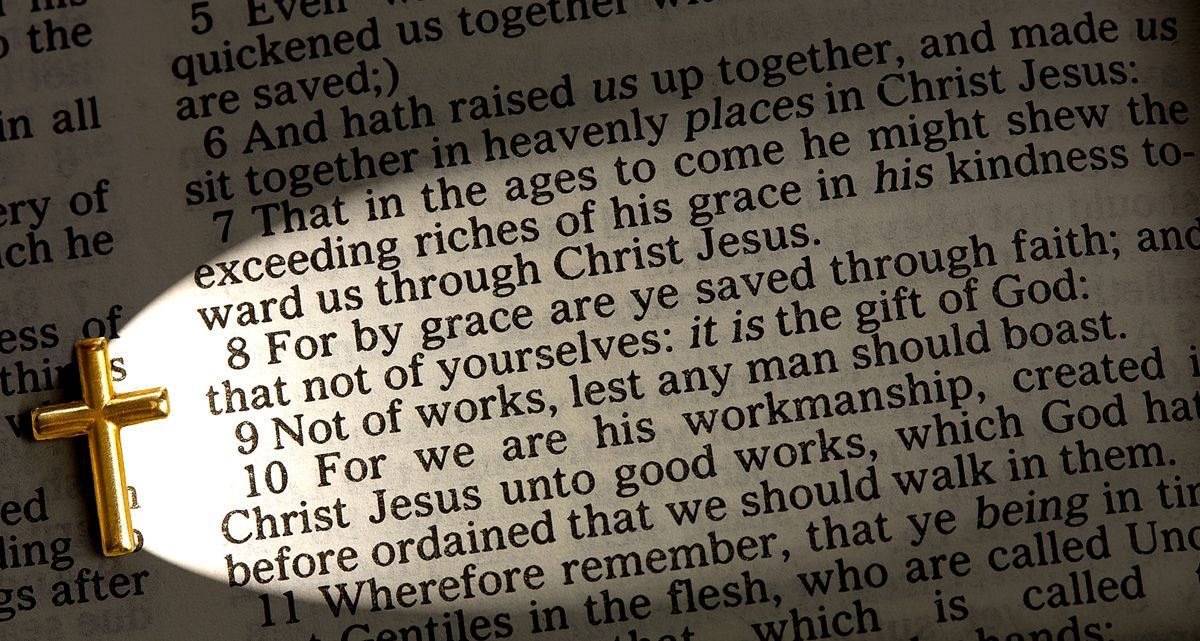
“For by grace are ye saved through faith; and that not of yourselves: it is the gift of God: Not of works, lest any man should boast. For we are his workmanship, created in Christ Jesus unto good works, which God hath before ordained that we should walk in them.” Ephesians 2:8-10